


There’s something quietly frustrating about working in a cramped space. The desk feels crowded, your shoulders tighten without you noticing, and somehow even simple tasks begin to feel heavier. Yet small spaces don’t have to feel limiting. In fact, with the right setup, a compact desk area can feel expansive, calm, and even inspiring.
This isn’t about buying more furniture or chasing perfection. It’s about using space intentionally—thinking in layers, light, flow, and function. Below are six desk setups designed specifically for small spaces, each one crafted to make your area feel larger than it actually is.
Along the way, you’ll find practical layouts, smart organization ideas, and visual strategies that subtly trick your brain into perceiving more space.
setup 1: the wall-hugging minimalist station
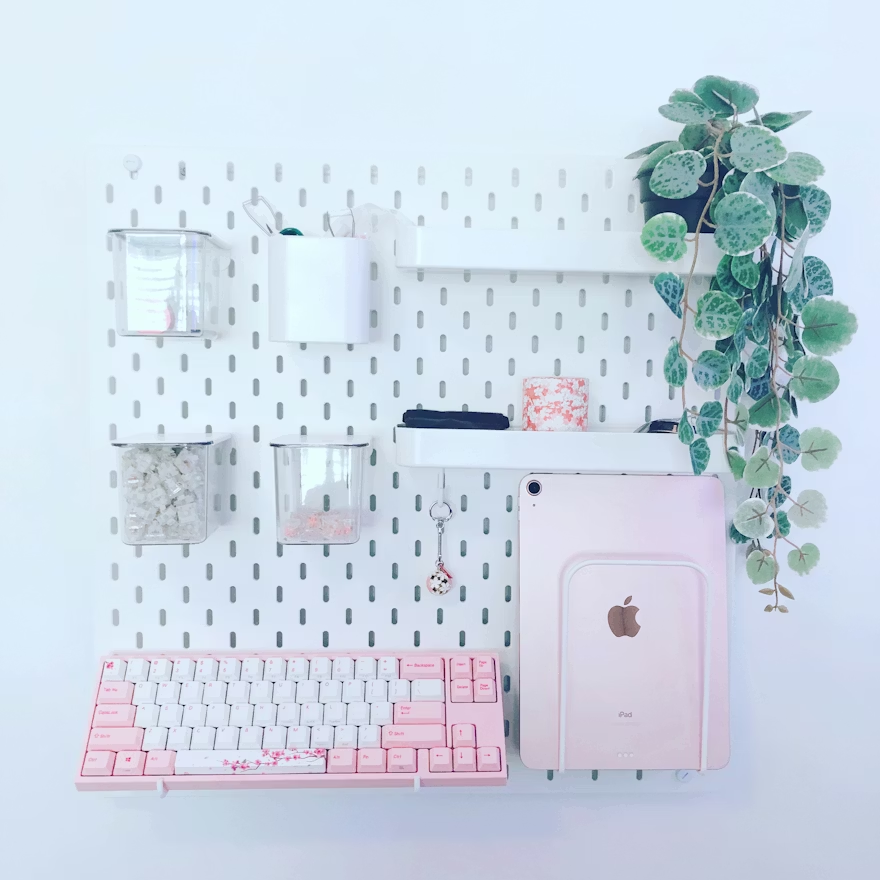
This setup works because it removes visual noise. Instead of competing for attention, everything aligns into a clean, quiet composition.
Imagine a slim desk placed flush against a wall. No bulky drawers, no heavy legs—just a floating or narrow table. Above it, a single shelf or two holds only essential items. The wall remains mostly visible, which keeps the space feeling open.
The key principle here is negative space. When your eyes have room to rest, your brain interprets the area as larger.
Key elements:
- Narrow desk (depth: 40–50 cm)
- Wall-mounted shelf
- Neutral color palette
- Hidden cable management
- One focal object (plant, lamp, or framed art)
Practical layout chart:
| Element | Placement Strategy | Space Impact |
|---|---|---|
| Desk | Flush against wall | Maximizes floor space |
| Shelf | 30–50 cm above desk | Uses vertical area |
| Lighting | Wall-mounted or slim lamp | Reduces clutter |
| Storage | Minimal, hidden | Keeps visual calm |
Why it feels bigger:
Your eye travels horizontally without interruption. No bulky shapes, no overcrowding—just clean lines that extend the perceived width of the room.
setup 2: the corner wrap illusion
Corners are often underused, yet they can be the most powerful space multipliers. A wrap-style desk that fits snugly into a corner creates the illusion of depth and extension.
Instead of a single flat surface, this setup gives you two connected planes—one for work, one for overflow or creative space.
Key elements:
- L-shaped or DIY corner desk
- Dual-purpose zones (work + storage or work + creativity)
- Corner-mounted lighting
- Compact chair that tucks in fully
Functional zoning table:
| Zone | Purpose | Suggested Items |
|---|---|---|
| Primary desk area | Computer, writing | Laptop, notebook, mouse |
| Secondary surface | Storage or decor | Books, plant, organizer |
| Vertical corner | Visual height expansion | Shelf or pegboard |
Why it feels bigger:
Corners naturally extend perspective lines. Instead of a flat endpoint, your workspace wraps around, giving your brain the impression of more room than actually exists.
setup 3: the floating desk illusion
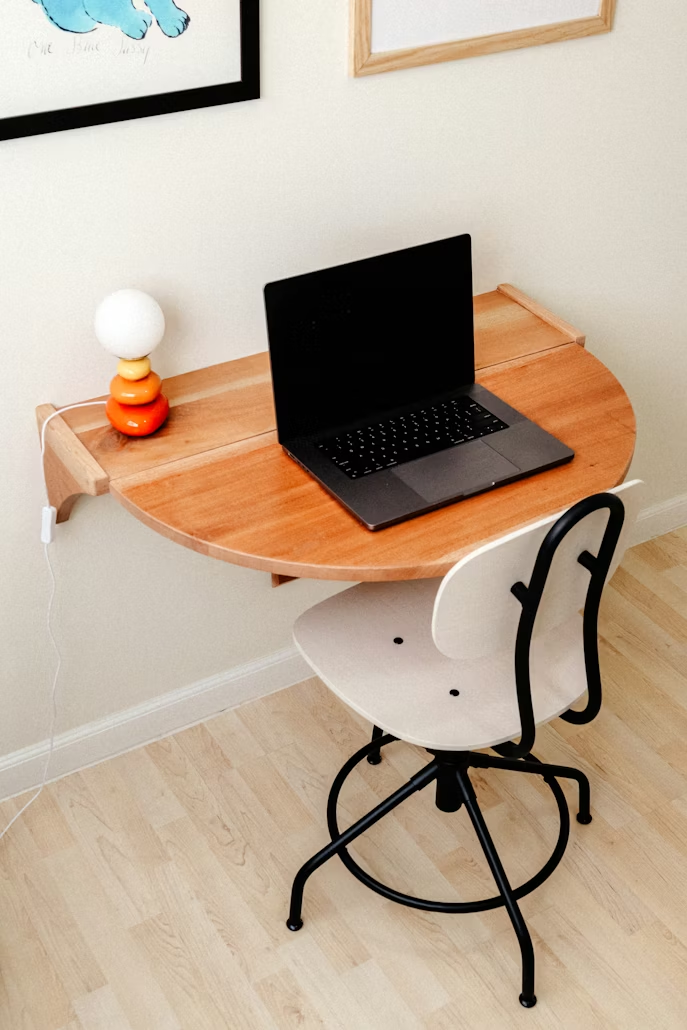
This setup is almost magical in its simplicity. By removing legs and grounding elements, a floating desk makes the floor visible, which instantly expands the sense of space.
The desk is mounted directly to the wall, often paired with floating shelves above. Even a tiny room can feel airy when the floor remains uninterrupted.
Key elements:
- Wall-mounted desk
- Floating shelves
- Under-desk open space
- Light materials (wood, white, or glass)
Spatial effect comparison:
| Feature | Traditional Desk | Floating Desk |
|---|---|---|
| Floor visibility | Limited | Maximum |
| Visual weight | Heavy | Light |
| Perceived space | Smaller | Larger |
Why it feels bigger:
Your eyes can see more of the floor, and your brain interprets that as increased room size. It’s a simple visual trick, but highly effective.
setup 4: the vertical expansion system
When you can’t go wider, go taller.
This setup embraces verticality—not just with shelves, but with a full system that uses wall space intelligently. Think pegboards, stacked shelves, hanging organizers, and even vertical lighting.
The trick is to keep the base desk minimal while building upward in a structured way.
Key elements:
- Slim desk base
- Pegboard or grid system
- Stacked shelving
- Vertical lighting (wall strip or tall lamp)
Vertical utilization chart:
| Height Level | Usage Type | Examples |
|---|---|---|
| Desk level | Active work | Laptop, notebook |
| Eye level | Frequent access | Pens, tools, notes |
| Above eye level | Storage/display | Books, decor, boxes |
Why it feels bigger:
Vertical lines draw the eye upward, making ceilings feel higher. This creates a sense of openness even in tight quarters.
setup 5: the dual-purpose folding desk
Sometimes the best way to make a space feel bigger is to let it disappear entirely when not in use.
A folding desk setup allows your workspace to transform. When open, it functions like a full desk. When closed, it blends into the wall like a cabinet or panel.
Key elements:
- Wall-mounted foldable desk
- Hidden compartments
- Compact seating
- Minimal accessories
Usage flexibility table:
| Mode | Function | Space Impact |
|---|---|---|
| Open | Full workspace | Moderate occupancy |
| Closed | Wall feature | Zero floor usage |
Why it feels bigger:
Because the desk isn’t always present, the room gets to “breathe.” This dynamic space usage prevents constant visual clutter.
setup 6: the light-enhanced illusion desk
Light is one of the most powerful tools for expanding space. A poorly lit desk feels boxed in, while a well-lit one feels open and breathable.
This setup focuses on maximizing both natural and artificial light to create depth.
Key elements:
- Desk near a window
- Reflective surfaces (glass, metal, light wood)
- Soft ambient lighting
- Minimal shadows
Lighting impact chart:
| Lighting Type | Effect on Space | Best Use Case |
|---|---|---|
| Natural light | Expands depth | Daytime work |
| Warm ambient | Softens boundaries | Evening comfort |
| Task lighting | Focus without clutter | Reading, writing |
Why it feels bigger:
Light reduces visual boundaries. When shadows are softened and surfaces reflect brightness, the room feels more open and continuous.
combining elements for maximum effect
The real magic happens when you combine strategies from different setups. For example:
- A floating desk with vertical storage
- A corner setup enhanced with natural light
- A folding desk with minimalist styling
Combination strategy table:
| Combination Type | Resulting Effect |
|---|---|
| Floating + Minimalist | Ultra-clean, open feel |
| Corner + Vertical | Maximum functional density |
| Light + Reflective materials | Bright, airy environment |
common mistakes that make small desks feel smaller
Even the best furniture can’t fix poor layout choices. Here are a few pitfalls to avoid:
- Over-accessorizing: Too many items break visual flow
- Dark, heavy colors: These absorb light and shrink space
- Bulky chairs: They dominate the room unnecessarily
- Visible cables: They create visual clutter instantly
Mistake impact table:
| Mistake | Visual Effect | Fix |
|---|---|---|
| Clutter | Overwhelming | Limit to essentials |
| Dark tones | Shrinking effect | Use lighter palette |
| Large furniture | Crowded feel | Scale down |
how to choose the right setup for your space
Not every setup works for every room. Your choice depends on three main factors:
- Available floor space
- Wall usability
- Daily work needs
Quick decision guide:
| Situation | Best Setup Type |
|---|---|
| Very tight space | Floating or folding desk |
| Empty corner available | Corner wrap |
| Limited floor, tall walls | Vertical expansion |
| Good natural light | Light-enhanced setup |
the psychology of space perception
What makes a space feel “big” isn’t just size—it’s perception.
Your brain processes:
- Lines (horizontal vs vertical)
- Light and shadow
- Visual interruptions
- Object density
By controlling these elements, you’re not changing the room—you’re changing how it’s experienced.
frequently asked questions
- what is the best desk type for extremely small rooms?
A floating desk or folding desk is usually the best choice. Both minimize floor usage and keep the room feeling open.
- how do i make my desk look less cluttered?
Limit visible items to essentials, use hidden storage, and keep cables out of sight. A clean surface immediately feels more spacious.
- does color really affect space perception?
Yes. Light colors reflect more light and make spaces feel bigger, while dark colors absorb light and create a more enclosed feeling.
- is it better to have shelves or drawers in a small desk setup?
Shelves are often better because they use vertical space and keep the floor area open. Drawers can feel bulky if overused.
- can lighting alone make a desk feel bigger?
Lighting plays a huge role. Proper lighting reduces shadows and creates depth, which can significantly enhance the sense of space.
- what’s the biggest mistake people make with small desks?
Trying to fit too much into a small area. Overcrowding defeats the purpose of space-saving design.