


Remote work has transformed how millions of people approach their daily responsibilities. Many professionals now work from bedrooms, living rooms, or small apartments where creating a dedicated office space can feel challenging. While expensive furniture and high-end equipment often dominate social media office tours, the truth is that productivity does not require a large budget.
A budget home office setup focuses on practical tools, smart organization, and efficient layouts that help you complete tasks without unnecessary expenses. With a little creativity and thoughtful planning, even a small workspace can become a productive environment that supports focus, comfort, and efficiency.
In this guide, we will explore six essential budget home office productivity setups designed for daily work. These setups are ideal for freelancers, students, remote employees, and entrepreneurs who want to improve productivity without overspending. Each section includes informational tables, productivity comparisons, and practical examples that demonstrate how to create a functional office space with minimal investment.
The goal is simple: build a workspace that helps you work better every day while keeping costs low.
Why Budget Home Office Setups Matter
Many people believe that productivity requires expensive ergonomic chairs, large standing desks, and multiple monitors. While such equipment can be helpful, they are not necessary for building an effective workspace.
A well-planned budget setup focuses on functionality rather than luxury. It emphasizes using existing furniture, affordable accessories, and simple organization methods.
Budget vs Expensive Office Setup Comparison
| Feature | Budget Setup | Expensive Setup |
|---|---|---|
| Initial cost | Low | High |
| Setup time | Quick | Moderate |
| Flexibility | High | Moderate |
| Productivity potential | High (if organized) | High |
A productive workspace depends more on organization, lighting, and workflow than on expensive furniture.
Average Cost Breakdown of a Budget Office
| Item | Estimated Cost |
|---|---|
| Basic desk or table | $40 – $120 |
| Comfortable chair | $50 – $150 |
| Desk lamp | $10 – $30 |
| Storage boxes | $10 – $25 |
| Cable management tools | $5 – $15 |
Even with limited resources, a simple workspace can support daily productivity and long-term work habits.
Setup 1: The Simple Desk Productivity Setup
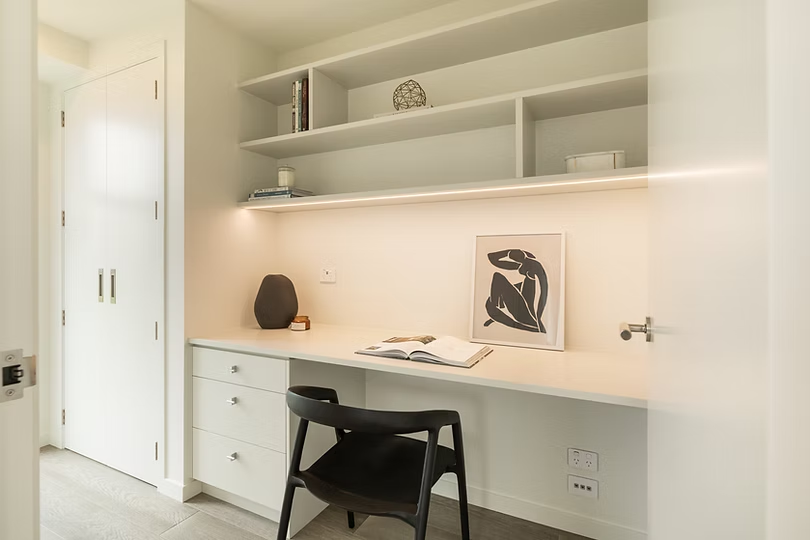
The Simple Desk Setup is one of the most effective and affordable ways to create a functional workspace. It focuses on using a basic table or desk combined with a few essential tools.
Instead of filling the desk with gadgets, this setup prioritizes items that support daily tasks.
Core Items for a Simple Desk Setup
| Item | Purpose |
|---|---|
| Laptop or computer | Main work device |
| Keyboard and mouse | Efficient input |
| Notebook or planner | Task tracking |
| Desk lamp | Lighting for focus |
| Water bottle | Hydration |
These items are sufficient for most daily work tasks such as writing, programming, meetings, or studying.
Desk Layout Example
| Desk Area | Recommended Item |
|---|---|
| Center | Laptop or monitor |
| Left side | Notebook and pen |
| Right side | Mouse |
| Corner | Lamp |
A simple desk setup ensures that everything you need is within reach, reducing interruptions during work sessions.
Setup 2: The Vertical Storage Budget Setup
Limited desk space is a common problem in home offices. Instead of buying larger desks or cabinets, vertical storage solutions provide an affordable way to increase storage.
The Vertical Storage Setup uses wall space to organize office supplies and accessories.
Vertical Storage Options
| Storage Tool | Purpose |
|---|---|
| Floating shelves | Store books and documents |
| Pegboards | Hang tools and accessories |
| Wall organizers | Store notebooks and planners |
| Hooks | Hold headphones or bags |
Benefits of Vertical Storage
- Saves desk space
- Keeps items organized
- Makes tools easier to find
Storage Efficiency Chart
| Storage Method | Space Efficiency | Cost Level |
|---|---|---|
| Desk drawers | Moderate | Medium |
| Floor cabinets | Low | High |
| Wall shelves | High | Low |
Vertical storage allows small offices to remain organized without taking up valuable floor space.
Setup 3: The Multi-Purpose Furniture Setup
For people living in small homes or shared apartments, dedicated office furniture may not be practical. A multi-purpose furniture setup solves this problem by allowing one piece of furniture to serve multiple functions.
Examples of Multi-Purpose Office Furniture
| Furniture | Multiple Uses |
|---|---|
| Dining table | Work desk + dining area |
| Bookshelf desk | Storage + workspace |
| Storage bench | Seating + storage |
| Folding table | Portable workspace |
Advantages of Multi-Purpose Furniture
- Reduces furniture costs
- Saves space in small homes
- Keeps rooms organized
Cost Efficiency Comparison
| Furniture Type | Average Cost | Functionality |
|---|---|---|
| Standard desk | $100 – $300 | Single function |
| Multi-purpose desk | $80 – $200 | Multiple functions |
This setup is particularly useful for studio apartments or shared living environments.
Setup 4: The Natural Light Productivity Setup
Lighting is one of the most important factors affecting productivity. Poor lighting can cause eye strain, fatigue, and headaches.
A natural light setup improves both comfort and focus without costing anything.
Best Desk Placement for Lighting
| Desk Position | Lighting Quality |
|---|---|
| Next to window | Excellent |
| Side of window | Good |
| Opposite window | Moderate |
| Far from window | Poor |
Natural light also improves mood and helps regulate sleep cycles.
Lighting Productivity Comparison
| Lighting Type | Productivity Impact |
|---|---|
| Natural daylight | Very high |
| LED desk lamp | High |
| Dim room lighting | Low |
If natural light is limited, an affordable desk lamp can significantly improve visibility.
Setup 5: The Cable Management Budget Setup
Cable clutter can quickly make a workspace look messy and disorganized. Fortunately, simple cable management solutions are inexpensive and easy to implement.
Common Cable Problems and Solutions
| Problem | Solution |
|---|---|
| Tangled cables | Velcro ties |
| Visible wires | Cable clips |
| Charger clutter | Cable boxes |
| Desk mess | Under-desk trays |
Cable Organization Impact
| Setup Type | Workspace Appearance |
|---|---|
| No cable management | Messy |
| Basic cable clips | Organized |
| Hidden cable system | Clean |
Keeping cables organized improves both aesthetics and productivity by preventing distractions.
Setup 6: The Focus-Friendly Budget Workspace
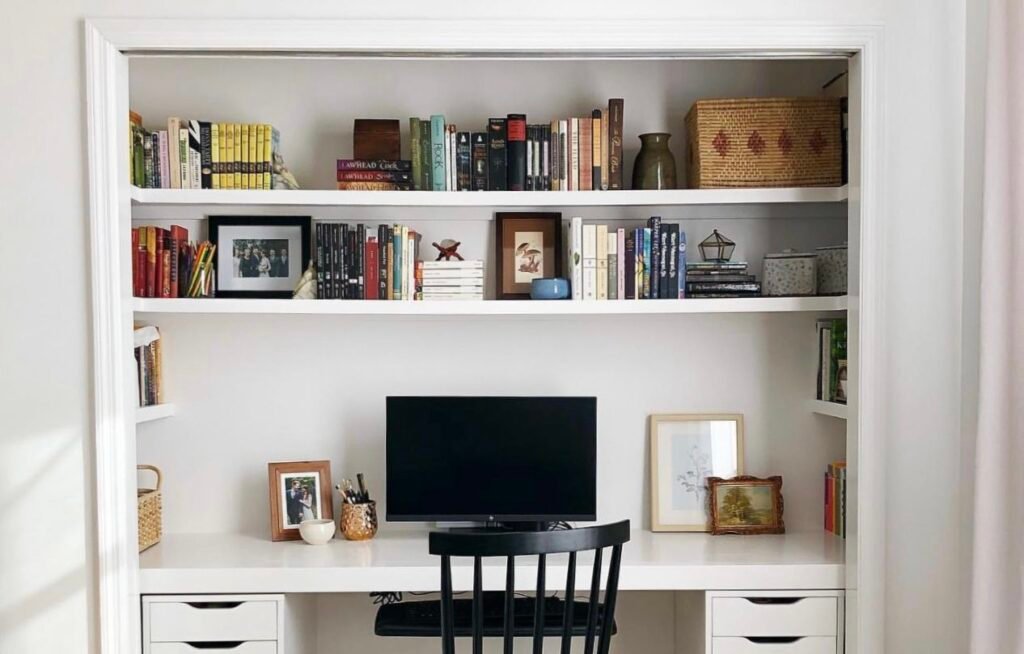
The Focus-Friendly Setup is designed to reduce distractions and help you concentrate on important tasks.
This setup emphasizes minimal decoration, comfortable seating, and a calm environment.
Key Elements of a Focus-Friendly Workspace
| Element | Benefit |
|---|---|
| Quiet corner | Fewer interruptions |
| Simple desk layout | Reduced distractions |
| Neutral colors | Calm atmosphere |
| Small plant | Visual comfort |
Focus Environment Comparison
| Workspace Type | Average Focus Duration |
|---|---|
| Noisy workspace | 15–20 minutes |
| Moderate distractions | 30–40 minutes |
| Focus-friendly setup | 60–90 minutes |
Creating a dedicated workspace signals to your brain that it is time to work.
Budget Home Office Cost Planning
Creating a home office does not require large investments. A simple budget plan helps you allocate money efficiently.
Sample Budget Plan
| Item | Budget Range |
|---|---|
| Desk or table | $50 |
| Chair | $80 |
| Lighting | $20 |
| Storage | $20 |
| Accessories | $15 |
Total estimated budget: $185
Many people already own some of these items, reducing costs even further.
Daily Productivity Routine for Budget Offices
Workspace design alone cannot guarantee productivity. A structured daily routine is equally important.
Example Daily Routine
| Time | Activity |
|---|---|
| Morning | Plan tasks |
| Late morning | Deep work session |
| Afternoon | Meetings and collaboration |
| Evening | Workspace cleanup |
Cleaning and organizing your workspace each day ensures it remains ready for the next work session.
Common Mistakes in Budget Home Offices
Even low-cost setups can become inefficient if poorly designed.
Mistake 1: Buying Cheap but Uncomfortable Chairs
Comfort should not be sacrificed, especially for long work hours.
Mistake 2: Poor Lighting
Working in dim lighting reduces productivity and increases eye strain.
Mistake 3: Too Many Decorations
Excessive decorations can clutter a small workspace.
Mistake 4: Lack of Storage
Without proper storage, clutter quickly accumulates.
Long-Term Benefits of Budget Home Offices
A well-organized budget office can deliver several long-term benefits.
Productivity Benefits
| Benefit | Impact |
|---|---|
| Organized workspace | Better focus |
| Comfortable environment | Increased efficiency |
| Reduced distractions | Faster workflow |
Lifestyle Benefits
- Lower financial stress
- Flexible workspace design
- Easier maintenance
Over time, a thoughtfully designed workspace supports both productivity and work-life balance.
Conclusion
Building a productive home office does not require expensive furniture or luxury equipment. By focusing on practical solutions and smart organization, anyone can create a workspace that supports daily work tasks without exceeding their budget.
The six setups discussed in this guide demonstrate that productivity comes from thoughtful design rather than high costs. Simple desks, vertical storage, natural lighting, multi-purpose furniture, cable management, and distraction-free environments can dramatically improve the way you work from home.
A budget home office encourages creativity and efficiency. When every item serves a purpose and the workspace remains organized, it becomes easier to focus on meaningful work.
Ultimately, the goal of a budget office is not just to save money — it is to create a space where productivity, comfort, and simplicity come together to support your professional goals every day.
Frequently Asked Questions (FAQs)
1. How much does a budget home office usually cost?
A basic home office can cost between $150 and $300, depending on the desk, chair, and accessories you choose.
2. Can a small room be used as a productive office?
Yes. Even a small corner of a room can become an efficient workspace with proper organization and minimal furniture.
3. What is the most important item in a home office?
A comfortable chair and a stable desk are the most important items because they directly affect comfort and productivity.
4. How can I improve productivity without buying expensive equipment?
Focus on organization, proper lighting, clutter-free desks, and a structured work routine.
5. Is natural lighting better than artificial lighting for work?
Yes. Natural light improves mood, reduces eye strain, and increases alertness during work hours.
6. How do I keep my budget workspace organized?
Use simple storage boxes, wall shelves, cable clips, and daily cleaning habits to maintain an organized environment.