


Working from home offers flexibility, independence, and comfort. However, without a well-organized workspace, remote work can quickly become distracting and inefficient. Many professionals struggle with cluttered desks, unnecessary equipment, and chaotic layouts that reduce productivity rather than improve it.
This is where minimalist home office setups become powerful. A minimalist workspace focuses on simplicity, functionality, and efficiency. Instead of filling the desk with decorations, gadgets, and unnecessary furniture, minimalist workspaces include only the tools that support productivity.
The main goal of minimalist office design is not just aesthetic appeal. It is about saving time, reducing distractions, and improving workflow. When your workspace is clean and thoughtfully designed, you spend less time searching for items, less time reorganizing your desk, and more time focusing on meaningful work.
In this guide, we will explore six smart minimalist home office productivity setups that save time. Each setup is designed for people who want a clean workspace, improved concentration, and efficient work routines.
You will also find informational tables, productivity charts, and practical examples to help you create a workspace that truly supports your daily tasks.
Why Minimalist Workspaces Improve Productivity
Minimalism in workspace design is based on a simple principle: fewer distractions lead to deeper focus.
Research in workplace psychology shows that clutter increases mental fatigue and slows decision-making. When too many objects compete for attention, the brain struggles to prioritize tasks.
A minimalist setup solves this problem by limiting visual noise and emphasizing only essential tools.
Clutter vs Minimal Workspace Impact
| Workspace Type | Average Focus Level | Time Lost Searching for Items | Stress Level |
|---|---|---|---|
| Cluttered workspace | Low | 10–15 minutes daily | High |
| Moderately organized desk | Medium | 5–7 minutes daily | Moderate |
| Minimalist workspace | High | 1–2 minutes daily | Low |
Over time, even a few minutes saved each day can significantly improve productivity.
For example:
| Time Saved Per Day | Time Saved Per Month | Time Saved Per Year |
|---|---|---|
| 5 minutes | 2.5 hours | 30 hours |
| 10 minutes | 5 hours | 60 hours |
| 20 minutes | 10 hours | 120 hours |
A minimalist office therefore does more than look clean — it gives you back valuable time.
Setup 1: The Essential Desk Setup
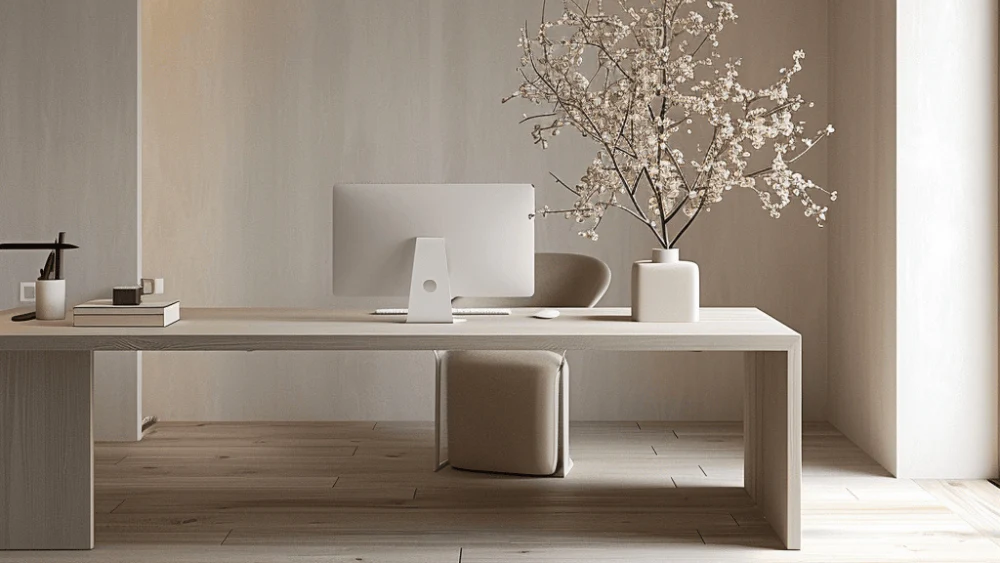
The Essential Desk Setup is the foundation of minimalist productivity. It includes only the core tools required to perform your work tasks effectively.
Instead of placing dozens of objects on the desk, this setup focuses on four to six essential items.
Essential Items for a Minimal Desk
| Item | Purpose |
|---|---|
| Laptop or monitor | Primary work device |
| Keyboard and mouse | Efficient input |
| Notebook or planner | Quick task notes |
| Desk lamp | Proper lighting |
| Water bottle | Hydration during work |
Everything else should be stored away in drawers or shelves.
Benefits of the Essential Desk Setup
- Faster task focus
- Reduced visual distractions
- Easier cleaning
- More working surface area
This setup works particularly well for writers, developers, freelancers, designers, and students.
Example Essential Desk Layout
| Desk Area | Recommended Item |
|---|---|
| Center | Laptop or monitor |
| Right side | Mouse and notebook |
| Left side | Small lamp |
| Corner | Water bottle |
Keeping the desk organized in this way ensures that everything has a defined place, preventing clutter from building up.
Setup 2: The Vertical Storage Setup
Minimalism does not mean having fewer tools. It means organizing tools intelligently.
The Vertical Storage Setup is ideal for small home offices where desk space is limited.
Instead of storing everything on the desk, items are moved upward onto wall shelves or pegboards.
Vertical Storage Organization
| Wall Section | Storage Type | Best Items to Store |
|---|---|---|
| Top shelf | Bookshelf | Reference books |
| Middle shelf | Storage baskets | Chargers and accessories |
| Pegboard | Hooks | Headphones and cables |
| Magnetic board | Notes | Task reminders |
This setup frees up desk space while keeping important items within reach.
Productivity Advantage
When frequently used tools are visible and accessible, you waste less time searching for them.
Many professionals use vertical storage to organize:
- notebooks
- cables
- stationery
- planners
- headphones
Vertical Space Efficiency Chart
| Workspace Size | Desk Storage | Vertical Storage |
|---|---|---|
| Tiny office | Limited | High efficiency |
| Medium office | Moderate | Useful |
| Large office | Optional | Optional |
For tiny offices, vertical storage is often the most powerful space-saving strategy.
Setup 3: The Cable-Free Workspace Setup
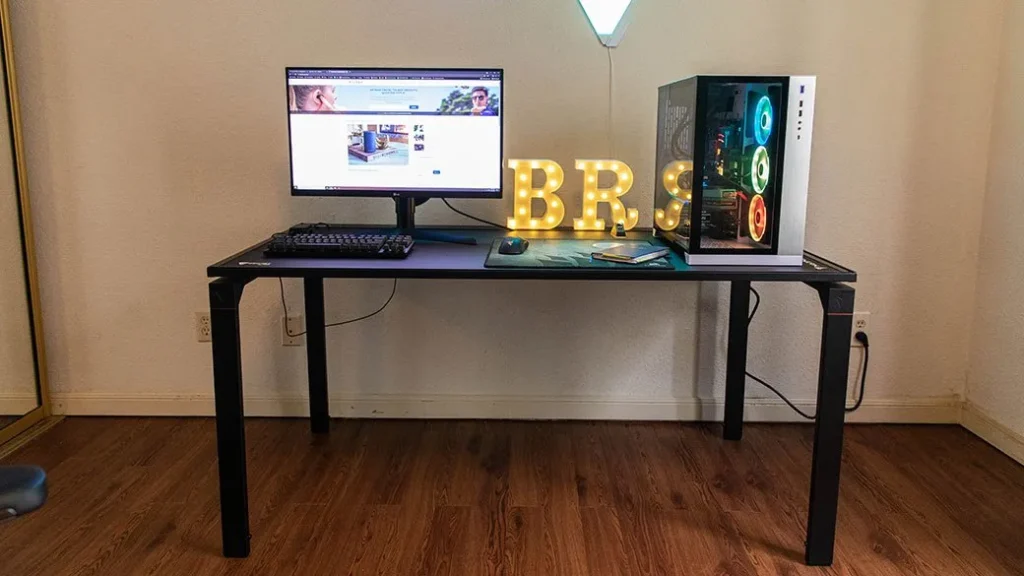
Cables are one of the most common sources of desk clutter. Charging wires, monitor cables, and USB cords often create messy environments that make the workspace look chaotic.
The Cable-Free Workspace Setup focuses on using wireless tools and hidden cable management.
Cable Management Solutions
| Problem | Minimalist Solution |
|---|---|
| Visible wires | Cable clips |
| Tangled cords | Velcro ties |
| Charger clutter | Cable boxes |
| Multiple wires | Wireless accessories |
Recommended Wireless Tools
- Wireless keyboard
- Wireless mouse
- Bluetooth headphones
- Wireless charger
Workspace Cleanliness Comparison
| Setup Type | Desk Cleanliness | Visual Simplicity |
|---|---|---|
| Cable-heavy setup | Low | Cluttered |
| Partial cable management | Moderate | Acceptable |
| Cable-free setup | High | Minimal |
When cables are hidden or removed, the workspace instantly feels cleaner and more professional.
Setup 4: The Focus Zone Setup
A Focus Zone is a minimalist workspace designed specifically for deep work and concentration.
This setup removes distractions and creates a mental boundary between work and personal activities.
Key Elements of a Focus Zone
| Element | Purpose |
|---|---|
| Noise-canceling headphones | Reduce external noise |
| Neutral color palette | Calm visual environment |
| Task board | Track daily goals |
| Minimal desk items | Prevent distraction |
Focus Productivity Chart
| Environment | Average Focus Duration |
|---|---|
| Distracting environment | 15–20 minutes |
| Moderate distractions | 30–40 minutes |
| Focus zone setup | 60–90 minutes |
A focus zone helps you maintain deep concentration for longer periods.
How to Create a Focus Zone
- Choose a quiet corner of your home
- Remove unnecessary furniture
- Use calming colors such as white, gray, or beige
- Add a small plant for visual comfort
The result is a workspace designed for maximum productivity and minimal interruption.
Setup 5: The Foldable Minimalist Office Setup
For people living in studio apartments or shared homes, a permanent office may not be practical.
A foldable setup allows you to create a workspace when needed and hide it when work is finished.
Foldable Workspace Components
| Item | Function |
|---|---|
| Foldable wall desk | Main workspace |
| Slim chair | Easy storage |
| Wall shelf | Basic office storage |
| Portable lamp | Lighting |
Foldable Desk Size Guide
| Desk Type | Width | Best Use |
|---|---|---|
| Compact | 70–80 cm | Laptop work |
| Medium | 90–100 cm | Laptop + notebook |
| Large | 110–120 cm | Full workstation |
Benefits of Foldable Offices
- Saves space
- Maintains clean living areas
- Encourages work-life separation
- Prevents workspace clutter
When the desk is folded away, your room returns to its normal layout.
Setup 6: The Natural Light Productivity Setup
Lighting significantly affects concentration and mood. Poor lighting causes eye strain and fatigue, while good lighting improves alertness.
A minimalist workspace should take advantage of natural light whenever possible.
Ideal Desk Position for Lighting
| Desk Placement | Lighting Quality |
|---|---|
| Near window | Excellent |
| Side of window | Good |
| Opposite window | Moderate |
| Far from window | Poor |
Natural Light Productivity Benefits
- Improves mood
- Reduces eye strain
- Increases alertness
- Improves sleep patterns
Lighting Productivity Comparison
| Lighting Type | Productivity Level |
|---|---|
| Natural daylight | Very high |
| LED desk lamp | High |
| Dim room lighting | Low |
Adding simple elements like light curtains, mirrors, and reflective surfaces can increase brightness in small rooms.
Minimalist Office Design Principles
To successfully implement minimalist setups, follow these core principles.
1. Keep Only What You Use
Remove tools that you rarely use.
2. Assign Everything a Place
Every item should have a designated storage location.
3. Prioritize Comfort
A minimalist office must still support good ergonomics.
4. Avoid Decorative Clutter
Choose one or two meaningful decorations rather than many small items.
Daily Minimalist Workspace Routine
Maintaining a minimalist office requires small daily habits.
Recommended Routine
| Time | Activity |
|---|---|
| Morning | Prepare desk for work |
| Midday | Quick desk reset |
| End of day | Clear unnecessary items |
| Weekly | Remove clutter |
Regular maintenance ensures the workspace remains organized and productive.
Minimalist Productivity Habits
Workspace design alone cannot guarantee productivity. Pair your setup with efficient work habits.
Example Productivity Schedule
| Work Method | Duration |
|---|---|
| Deep work session | 60 minutes |
| Short break | 10 minutes |
| Planning session | 15 minutes |
Combining a minimalist office with structured work routines maximizes productivity.
Common Mistakes in Minimalist Home Offices
Even minimalist offices can become inefficient if poorly designed.
Mistake 1: Removing Too Many Tools
Minimalism should simplify work, not limit functionality.
Mistake 2: Poor Lighting
A clean desk without proper lighting still reduces productivity.
Mistake 3: Ignoring Ergonomics
Comfortable chairs and correct monitor height are essential.
Mistake 4: Lack of Storage
Without hidden storage, clutter returns quickly.
Long-Term Benefits of Minimalist Workspaces
Minimalist offices provide several long-term advantages.
Productivity Benefits
| Benefit | Impact |
|---|---|
| Reduced distractions | Higher focus |
| Faster workflow | Less wasted time |
| Organized environment | Less stress |
Lifestyle Benefits
- Improved mental clarity
- Better work-life balance
- Easier cleaning and maintenance
Over time, minimalist workspaces support both productivity and wellbeing.
Conclusion
A well-designed minimalist home office can dramatically improve productivity, efficiency, and mental clarity. By focusing on simplicity and intentional design, you create a workspace that supports your work instead of distracting from it.
The six setups explored in this guide demonstrate that productivity does not require a large office or expensive equipment. What truly matters is how effectively your workspace is organized.
From essential desk setups and vertical storage solutions to cable-free workspaces and foldable desks, each setup offers practical strategies for saving time and reducing distractions.
When combined with consistent work habits and daily organization routines, these minimalist setups can transform even the smallest home office into a powerful productivity environment.
Ultimately, a minimalist office is not about owning fewer items — it is about creating a space where every item serves a purpose and every minute of your workday becomes more efficient.
Frequently Asked Questions (FAQs)
1. What is a minimalist home office setup?
A minimalist home office setup is a workspace designed with only essential tools and minimal distractions. It focuses on simplicity, organization, and functionality.
2. How does minimalism improve productivity?
Minimalism reduces visual clutter and distractions, allowing the brain to focus more easily on important tasks. This leads to better concentration and faster workflow.
3. What furniture is best for a minimalist office?
Simple desks, ergonomic chairs, floating shelves, and foldable desks work well in minimalist workspaces because they save space and maintain a clean look.
4. Can a minimalist office work in small spaces?
Yes. Minimalist setups are particularly effective in small rooms because they prioritize efficient layouts and reduce unnecessary furniture.
5. How do I keep my minimalist office organized?
Assign a place for every item, use vertical storage solutions, and clean the workspace at the end of each day.
6. Is natural lighting important for home office productivity?
Yes. Natural lighting improves mood, reduces eye strain, and increases alertness, making it an essential element of a productive workspace.