


Stop Operating in an Environment That Fights You
You open your laptop. The chair lacerates your spine. The lighting is too dim. Notifications are pinging. Your coffee is cold and your attention has vanished — and it’s not even 9 AM.
Sound familiar?
In reality, your performance is affected more by the environment around you than most people realize. A badly designed workspace isn’t just an inhumane experience. It pulls energy from you, takes your focus down and silently eats away at your best work — day after day.
But here’s the good news.
You don’t need an estate or a massive budget to create a workspace that truly works for you. You need intention, the right setup and a clear plan.
Here’s a round-up of 8 ultimate home office productivity setups tailored for online professionals — freelancers, remote employees, content creators, developers, coaches and everyone in between.
Each setup is different. Each one solves a specific problem. Find the one that works with your life, and build up from there.
What Makes a Home Office Actually Productive?
Before we get into the setups, it helps to know what actually moves the needle.
Studies in environmental psychology repeatedly demonstrate that three factors do more to increase workplace productivity than any other: comfort, control and clarity.
Comfort is when your body isn’t at war with its environment. Control is the ability to minimize noise, light and interruptions. Clarity means your space communicates with your brain: this is where the work happens.
Each setup on this list is built around those three principles.
Setup 1: The Deep Work Command Station
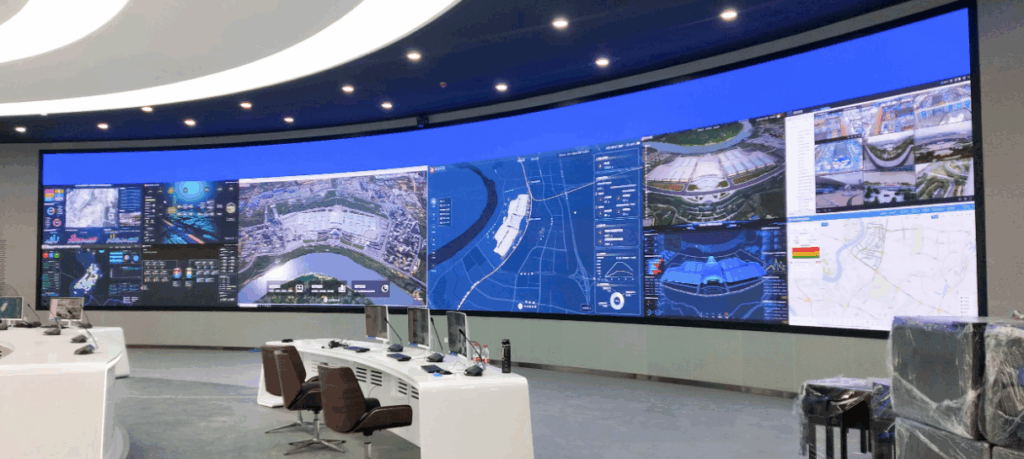
Best for: Writers, coders, analysts and anyone who does focused, single-task work for long stretches.
Some work demands total immersion. Writing a 3,000-word article. Debugging a complex codebase. Crunching data for hours. This type of work — sometimes referred to as “deep work” — is obliterated by distraction and bad ergonomics.
The Deep Work Command Center’s role is to guard your attention at all costs.
The Core Elements
| Item | Purpose | Estimated Cost |
|---|---|---|
| Large L-shaped or wide desk | Fit everything without clutter | $120–$300 |
| High-back ergonomic chair | Sit properly during long sessions | $150–$400 |
| Ultrawide curved monitor (34″+) | Switch less between windows, higher immersion | $250–$500 |
| Mechanical keyboard | Tactile feedback reduces fatigue | $60–$150 |
| Noise-canceling headphones | Blocks distraction, signals focus mode | $80–$250 |
| Desk pad / mat | Unifies the setup, protects surface | $20–$40 |
Total Estimated Range: $680–$1,640
An Ultrawide Monitor Makes All the Difference
Flipping between windows tends to shake you out of flow. An ultrawide monitor lets you keep your document open, your research tool open, and your communication tool visible all at once — without alt-tabbing every 30 seconds.
If an ultrawide is currently out of budget, two regular screens side by side produce a similar result at a fraction of the cost.
The Focus Protocol That Powers This Setup
Hardware alone won’t save you. Combine this setup with a simple focus protocol:
- Use Pomodoro breaks — 25 minutes on, 5 minutes off
- Store your phone outside your room or in a drawer
- Use a browser extension like Freedom or Cold Turkey to block distracting sites during work blocks
- Establish a clear “do not disturb” sign so housemates know you’re in the zone
Setup 2: The Video-First Creator Studio
Best for: YouTubers, podcasters, online coaches, course creators and anyone else who is regularly on camera.
Your content is only as good as how it looks and sounds. Grainy video and echo-filled audio signal to your audience — consciously or not — that you’re not a professional. First impressions stick.
This setup prioritizes audio and video quality above everything else.
What Your Creator Studio Needs
| Item | Recommended Option | Estimated Cost |
|---|---|---|
| Webcam or mirrorless camera | Logitech Brio or Sony ZV-E10 | $100–$750 |
| USB condenser microphone | Blue Yeti or Audio-Technica AT2020 | $80–$150 |
| Key light / ring light | Elgato Key Light or Neewer ring light | $40–$200 |
| Acoustic panels or foam | Reduces echo on recordings | $30–$80 |
| Adjustable monitor arm | Frees desk space, improves camera angle | $25–$60 |
| Solid backdrop or clean background | Bookshelf, plain wall, or fabric backdrop | $0–$50 |
Total Estimated Range: $275–$1,290
Every Creator Must Know This Lighting Rule
Three-point lighting is the gold standard. You need:
- Key light — your primary light source, positioned at 45 degrees in front of you
- Fill light — softer light on the opposite side to reduce harsh shadows
- Back light — behind you to separate you from the background
On a budget? Even one good key light properly placed will dramatically change how you look on camera compared to relying on overhead room lighting alone.
Audio Beats Video Every Time
Viewers will tolerate average video. They will click away from bad audio in seconds. If you’re choosing between upgrading your camera or your microphone first — always choose the microphone.
Setup 3: The Dual-Screen Multitasker’s Hub
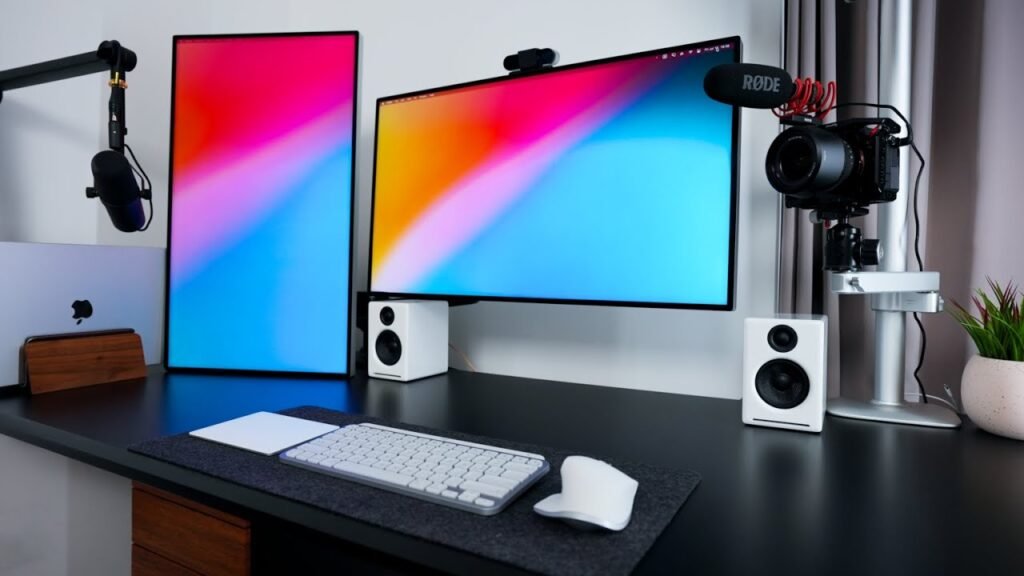
Best for: Virtual assistants, project managers, social media managers and online business owners juggling multiple responsibilities.
Certain tasks simply need more screen real estate. When you’re juggling client inboxes, updating spreadsheets, monitoring dashboards and responding to messages — all at once — a single screen becomes a bottleneck fast.
Building Your Dual-Screen Hub
| Item | Estimated Cost |
|---|---|
| Primary monitor (24–27 inch) | $150–$300 |
| Secondary monitor (same size or slightly smaller) | $100–$250 |
| Dual monitor stand/arm | $40–$90 |
| Compact wireless keyboard and mouse | $40–$80 |
| USB-C hub or docking station | $35–$90 |
| Desk cable management kit | $10–$20 |
Total Estimated Range: $375–$830
How to Configure Your Displays for Optimal Productivity
Screen placement matters more than most people realize.
Primary monitor: Directly in front of you, at eye level. This is where your main work lives.
Secondary monitor: Slightly to the side, angled inward at about 30 degrees. This is where your reference material, communication tools, or dashboards stay open.
Never place both monitors equidistant to your sides. Your neck will pay for it by the end of the day.
The App Stack That Powers This Setup
Great hardware needs great software to match. These free tools work beautifully on dual screens:
- Microsoft PowerToys (FancyZones) — Snap windows into custom zones on each monitor
- Notion — All-in-one workspace for your to-do list, notes and project docs
- Slack or Discord — Pin to your secondary screen for instant communication
- Google Calendar — Always on-screen so you never miss a meeting
Setup 4: The Health-First Ergonomic Workspace
Best for: Anyone dealing with back pain, wrist issues, eye strain or working 8+ hours daily.
Here’s the uncomfortable truth: the majority of home office setups are gradually sabotaging the people who work in them.
Bad posture. Wrist strain. Neck tension. Blurred vision from screen glare. These don’t just feel bad in the moment — they compound over months and years into serious health problems that affect your ability to work altogether.
This setup prioritizes your body.
The Ergonomic Setup Checklist
| Body Part | What You Need | Estimated Cost |
|---|---|---|
| Back & spine | True ergonomic chair (lumbar support) | $200–$600 |
| Neck | Monitor at eye level (use a stand or arm) | $20–$60 |
| Wrists | Ergonomic keyboard + vertical mouse | $60–$150 |
| Eyes | Anti-glare monitor, warm desk lamp | $30–$80 |
| Legs & circulation | Footrest + standing desk or converter | $20–$200 |
Total Estimated Range: $330–$1,090
The 20-20-20 Rule for Eye Health
Every 20 minutes, look at something 20 feet away for at least 20 seconds. This simple habit can greatly reduce digital eye strain. Set a recurring timer until the habit becomes ingrained.
Posture Quick-Check
Run through this checklist every time you sit down:
- ✅ Feet flat on the floor (or on a footrest)
- ✅ Knees at 90 degrees
- ✅ Screen at arm’s length away
- ✅ Top of monitor at or just below eye level
- ✅ Elbows at 90 degrees, wrists straight
- ✅ Lower back supported by chair lumbar
A couple of minutes of setup at the start of your day saves you hours of pain at the end of it.
Setup 5: The Compact Home Office for Small Spaces
Best for: City apartment dwellers, studio renters, shared-house workers and digital nomads between moves.
Not everyone has a spare bedroom to convert into a home office. Some people are working from a corner of their living room, a bedroom nook, or the smallest apartment imaginable.
Small space does not mean low productivity. It means being smarter about every last square inch.
Small Space, Big Output — The Equipment List
| Item | Space-Saving Feature | Estimated Cost |
|---|---|---|
| Wall-mounted fold-down desk | Folds flat when not in use | $80–$200 |
| Compact task chair or stool | Tucks under desk completely | $60–$150 |
| Laptop + single external monitor | Minimal footprint, dual screens | $100–$250 |
| Wall shelves above desk | Vertical storage, no floor space used | $30–$60 |
| All-in-one printer (if needed) | Compact vs. separate scanner/printer | $60–$120 |
| Cable management box | Hides power strips and cables neatly | $15–$30 |
Total Estimated Range: $345–$810
The Color Trick That Makes Tight Spaces Feel Bigger
Light colors open a space up. Dark colors close it in.
If you’re able, paint a wall in your office or install a light-colored backsplash behind your desk. Use a desk lamp with warm white light — not harsh blue-white. Hang a small mirror on the wall near your workspace — it reflects light and gives a sense of more space.
One Zone, One Purpose
The greatest challenge in a tight space isn’t physical — it’s psychological. When your bedroom is also your office, your brain struggles to separate rest mode from work mode.
Follow the same routine each day. Start work at the same time every day. Use a specific playlist or ritual to cue yourself that it’s work time. Clear off your desk at the end of each session, even if it means no more than folding down the wall desk and putting your laptop away.
Setup 6: The Standing and Moving Workspace
Best for: High-energy professionals, health-conscious workers and anyone who thinks more clearly when not sitting still.
Sitting for 8–10 hours a day is genuinely harmful. Multiple large-scale studies have linked prolonged sitting to increased risk of cardiovascular problems, metabolic issues and even decreased cognitive performance in the afternoon.
You don’t have to sit through all of it.
The Complete Standing + Movement Setup
| Item | Estimated Cost |
|---|---|
| Electric sit-stand desk | $300–$700 |
| Anti-fatigue mat | $30–$80 |
| Balance board or wobble board | $40–$100 |
| Under-desk walking treadmill (optional) | $200–$500 |
| Ergonomic stool for standing transitions | $60–$150 |
Total Estimated Range: $430–$1,530
The Budget Alternative
Don’t have $300–$700 for an electric standing desk? Try these instead:
- Desk converter: Rests on top of your existing desk and rises in seconds. Costs $50–$120.
- Fixed-height standing desk: Not adjustable, but far cheaper at $80–$150.
- DIY shelf riser: Built from a sturdy shelf, a stack of textbooks or a kitchen counter at the right height.
How to Alternate Properly
The goal isn’t to stand all day. That’s simply another type of strain. The sweet spot is to switch every 30–60 minutes.
An easy rule: stand during calls and video meetings, sit for deep focused work. This natural rhythm gets you moving without breaking concentration.
Setup 7: The Distraction-Proof Focus Bunker
Best for: Online professionals who struggle with focus, procrastination or working from noisy or busy environments.
Many people don’t need more equipment. They need fewer distractions.
This setup has just one mission: to eliminate every possible interruption so you can do your best work without fighting your environment every minute.
Physical Distraction Busters
| Problem | Solution | Estimated Cost |
|---|---|---|
| Noise from outside | Noise-canceling headphones | $60–$250 |
| Echo inside the room | Acoustic foam panels or thick rugs | $20–$60 |
| Visual clutter | Desk organizer + minimal decor | $15–$30 |
| Door distractions | Privacy sign + door draft stopper | $10–$20 |
| Bad lighting causing fatigue | Warm-tone adjustable desk lamp | $20–$40 |
Digital Distraction Busters
Physical quiet means nothing if your screen is a slot machine of pings and notifications.
Try these today — they’re all free:
- Turn off all non-essential desktop notifications
- Use Focus Mode or Do Not Disturb on your phone during work blocks
- Block social media during work hours with Freedom or Cold Turkey
- Close unused browser tabs — try the OneTab extension
- Set your email to check only twice a day, not constantly
The Environment-Behavior Connection
Your brain builds associations between places and behaviors. If you’ve been scrolling Instagram at your desk for months, your brain now links that desk with low-effort consumption — not focused work.
Break the association. Use your desk only for work for two weeks. No social media. No YouTube. No casual browsing. Within a few days, simply sitting at your desk will automatically trigger a more focused mental state.
Setup 8: The Premium All-in-One Professional Suite
Best for: Established online professionals, agency owners, highly paid freelancers and remote executives who want the best of everything.
If you’re ready to fully commit to your workspace, this is the setup. Every decision here is made with the goals of long-term performance, professional appearance and peak daily output.
This isn’t about showing off. It’s about creating a workspace so high-quality that it removes every possible friction point between you and your best work.
For more ideas on building your ideal workspace at any budget level, visit Remote Work Desk Setup — a dedicated resource for remote workers looking to optimize their home office.
The Premium Suite — Complete Equipment List
| Item | Top-Tier Option | Estimated Cost |
|---|---|---|
| Electric sit-stand desk | FlexiSpot E7 or Uplift V2 | $500–$900 |
| Premium ergonomic chair | Herman Miller Aeron or Steelcase Leap | $800–$1,500 |
| Ultrawide curved monitor (38″+) | LG 38WN95C or Dell U3821DW | $700–$1,200 |
| 4K webcam | Logitech Brio 4K | $150–$200 |
| Studio microphone | Shure MV7 or Rode NT-USB | $150–$270 |
| LED smart lighting system | Philips Hue or Elgato Key Light | $100–$250 |
| Laptop docking station | Thunderbolt 4 dock | $150–$300 |
| Premium wireless keyboard + mouse | Logitech MX Keys + MX Master 3 | $150–$230 |
| Desktop organizer + cable management | High-quality desk accessories | $50–$100 |
Total Estimated Range: $2,750–$4,950
Is a Premium Setup Worth It?
That depends entirely on what you earn from your workspace.
If your home office is generating $5,000–$10,000+ per month, then spending $3,000–$5,000 on a setup that allows you to work faster, better and more professionally makes complete sense as a business investment — not a luxury.
It’s like a contractor purchasing quality tools. The right equipment pays for itself.
The One Upgrade With the Highest ROI
According to research published by the Human Factors and Ergonomics Society, ergonomic improvements in the workplace consistently show measurable gains in productivity and reductions in discomfort. For online professionals, by far the single upgrade that makes the greatest impact — at any budget level — is always going to be the chair.
You spend more time in your chair than any other piece of equipment. A good chair reduces pain, promotes better posture and keeps your energy stable through a long workday. It’s the foundation on which everything else is built.
All 8 Setups Compared at a Glance
| Setup | Best For | Est. Cost Range | Top Priority |
|---|---|---|---|
| 1. Deep Work Command Center | Writers, coders, analysts | $680–$1,640 | Focus & immersion |
| 2. Video-First Creator Studio | Creators, coaches, educators | $275–$1,290 | Audio & video quality |
| 3. Dual-Screen Multitasker’s Hub | VAs, managers, business owners | $375–$830 | Screen space & workflow |
| 4. Ergonomic Health-First Workspace | Anyone with pain or 8+ hour days | $330–$1,090 | Body comfort & longevity |
| 5. Compact Setup for Small Spaces | Apartment workers, nomads | $345–$810 | Space efficiency |
| 6. Standing & Moving Workspace | Health-conscious, high-energy pros | $430–$1,530 | Movement & energy |
| 7. Distraction-Proof Focus Bunker | Easily distracted workers | $125–$400 | Noise & interruption control |
| 8. Premium All-in-One Suite | Established professionals | $2,750–$4,950 | Peak performance |
FAQs: Home Office Productivity Setups for Online Professionals
Q1: What type of home office setup is best for a beginning freelancer?
Begin with Setup 5 (Compact Setup) or Setup 7 (Distraction-Proof Bunker). Both are inexpensive and practical, and address the two most common beginner issues — limited space and difficulty focusing. When you’re first getting started, there’s no need to spend thousands. Get the basics right first.
Q2: What is a realistic amount for an online professional to invest in a home office?
There’s no single right answer. A functional setup that supports focused, professional work can run anywhere from $300 to $800. A mid-range setup with better ergonomics and gear costs between $800 and $2,000. Premium setups go beyond that. Keep your investment in line with your income level and how many hours per day you really spend at your desk.
Q3: What’s the single most important piece of equipment in any home office setup?
Your chair, without question. You spend more time sitting in it than any other piece of gear you own. A bad chair causes back pain, fatigue and poor posture that compound over time. Even if everything else in your setup is budget, invest as much as you can afford in a genuinely ergonomic chair.
Q4: Is it possible to create a professional-looking home office in a small apartment?
Absolutely. Setup 5 in this article was built specifically for small spaces. A wall-mounted fold-down desk, vertical shelving and smart cable management can turn even the smallest corner into a clean, professional workspace. Light colors and good lighting make a small space feel much bigger.
Q5: Do I really need two monitors, or is one enough?
It depends on your work. Writers and coders tend to work well on one large or ultrawide monitor. Virtual assistants, project managers and social media managers who juggle multiple tools simultaneously will notice a significant productivity boost with an extra screen. If you’re constantly switching between more than two or three windows, a second monitor is worth it.
Q6: What is the best free upgrade you can make for a home office?
Rearrange your desk to face a window. Natural light is free, it boosts your mood and alertness, and it makes you look dramatically better on video calls. Before you spend a cent, reposition your workspace to take advantage of the natural light available to you.
Q7: What can I do to stop getting distracted when working from home?
Combine physical and digital solutions. Close your door. Use noise-canceling headphones. Turn off all non-essential notifications. Block distracting websites during work hours with a free app like Freedom or Cold Turkey. And build a consistent start-of-day routine — it trains your brain to shift into work mode automatically.
Q8: Do I really need a standing desk for a home office?
Not required, but genuinely beneficial for anyone who sits through prolonged stretches. The research on prolonged sitting and health is well established. If a full electric standing desk is out of your price range, a desk converter ($50–$120) that sits on your existing desk offers the same sit-stand flexibility at a much lower cost.
Build Once, Work Smarter Every Day
Here’s the thing about home office productivity setups — the goal was never to have the most impressive desk on the internet.
The goal is simple. You want to sit down every morning and feel ready. You want your space to support your best work instead of fighting against it. You want to end the day having actually accomplished what you set out to do.
That happens when your chair supports your back. When your screen doesn’t strain your eyes. When noise isn’t bleeding through the walls. When your desk is clear and your tools are exactly where you need them.
Pick the setup from this list that matches where you are right now — your budget, your space, your type of work. You don’t need to build the perfect office in a weekend. Start with one meaningful upgrade. Then add another. Then another.
The best home office isn’t the one with the most expensive gear. It’s the one you actually show up to — energized, focused and ready to do great work.
Build your space with intention. The results will follow.