

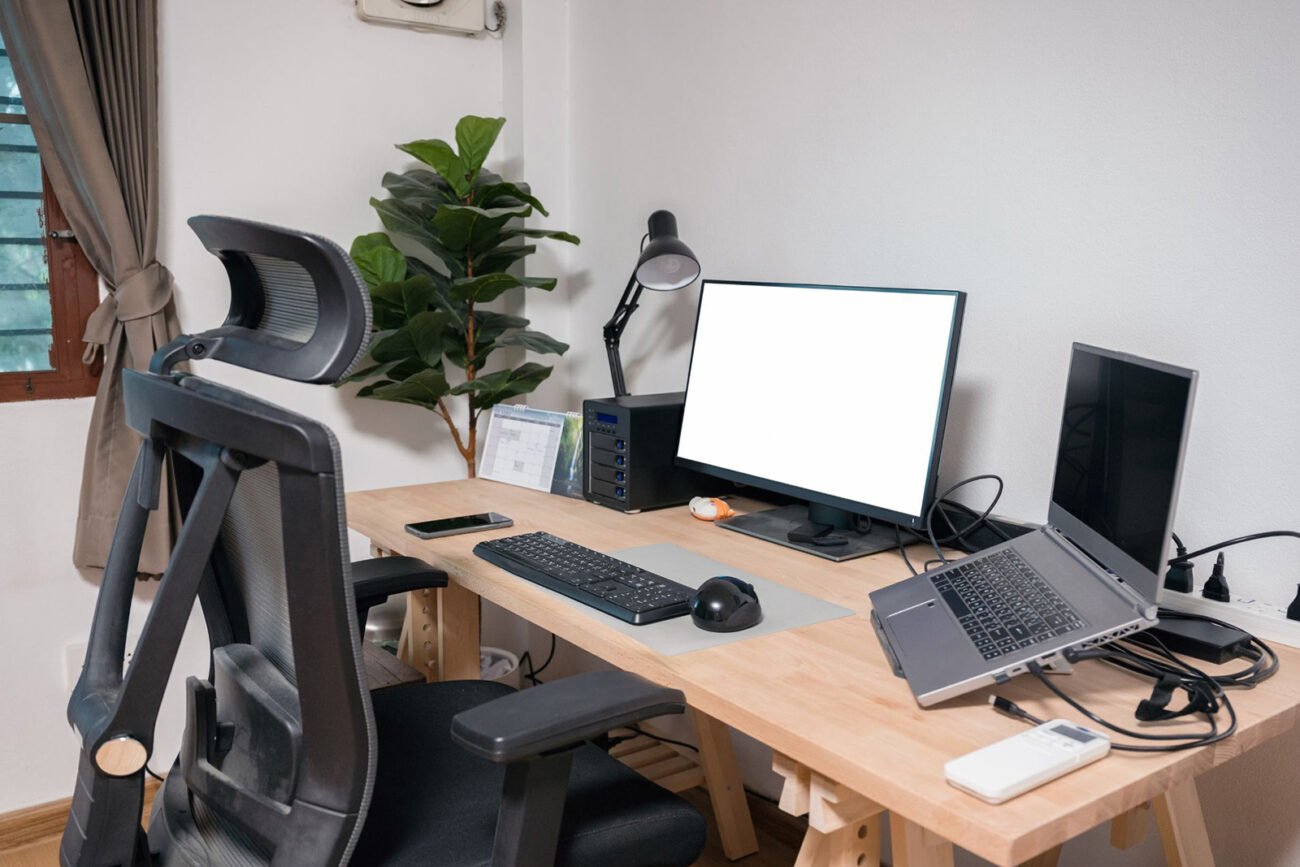
Working from home is no longer a temporary trend. For many professionals, entrepreneurs, freelancers, and remote employees, the home office has become the primary workspace. While this shift offers flexibility and independence, it also presents a challenge: how to maintain high levels of productivity outside a traditional office environment.
A high-performance workspace is not simply about owning the latest gadgets or having a large room dedicated to work. Instead, it is about designing a space that supports focus, efficiency, comfort, and workflow. When the workspace is organized intelligently, tasks become easier to complete, distractions decrease, and daily productivity increases.
Smart home office productivity setups combine ergonomic design, efficient layouts, lighting strategies, and digital organization. These setups ensure that your workspace actively supports your work habits instead of creating obstacles.
In this comprehensive guide, we will explore six smart home office productivity setups designed for high-performance workspaces. Each setup focuses on different aspects of productivity, including workspace layout, technology integration, comfort, and focus.
Throughout the article, you will also find informational tables, productivity comparisons, and practical workspace charts that demonstrate how thoughtful office design can significantly improve performance.
Why High-Performance Workspaces Matter
A workspace has a powerful influence on how efficiently people work. Research in workplace psychology shows that cluttered environments, poor lighting, and uncomfortable furniture can reduce productivity and increase fatigue.
High-performance workspaces aim to eliminate these problems by optimizing the work environment.
Factors That Influence Workspace Productivity
| Factor | Impact on Productivity |
|---|---|
| Lighting quality | Affects focus and energy |
| Desk organization | Reduces distractions |
| Ergonomic design | Prevents fatigue |
| Noise control | Supports concentration |
| Technology setup | Improves workflow speed |
When these factors work together, the workspace becomes a productivity tool rather than just a place to sit and work.
Productivity Levels by Workspace Quality
| Workspace Type | Average Focus Duration | Efficiency Level |
|---|---|---|
| Poorly designed workspace | 15–20 minutes | Low |
| Average home office | 30–45 minutes | Moderate |
| High-performance workspace | 60–90 minutes | High |
Creating a high-performance workspace is therefore an investment in both productivity and long-term wellbeing.
Setup 1: The Ergonomic Productivity Setup
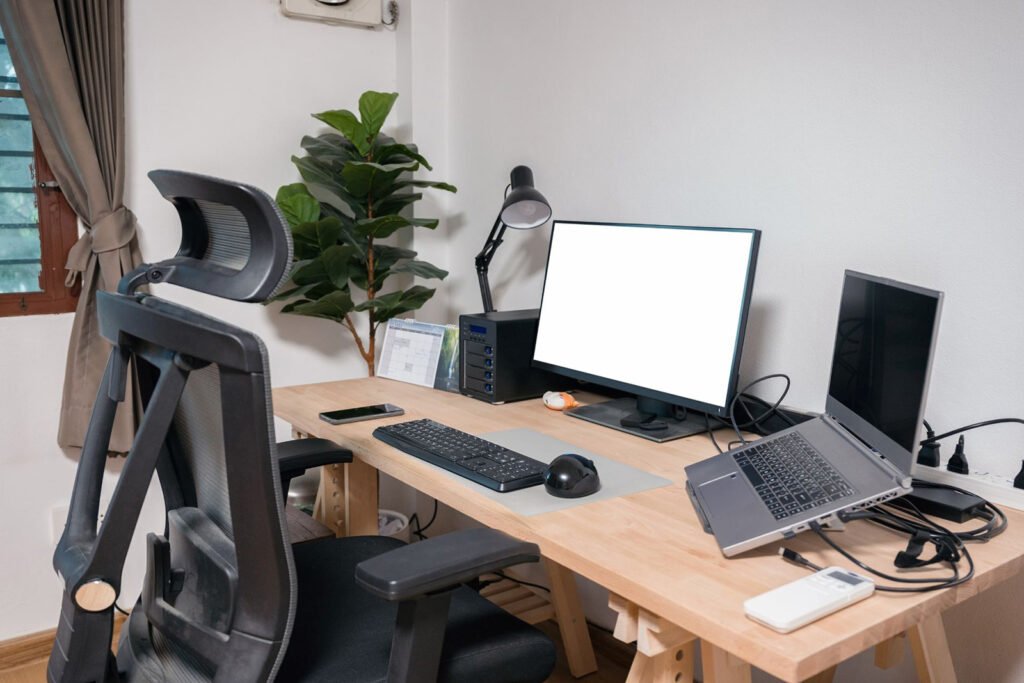
One of the most important aspects of a high-performance workspace is ergonomics. Poor posture and uncomfortable furniture can lead to fatigue, back pain, and reduced concentration.
The Ergonomic Productivity Setup focuses on creating a workspace that supports the body during long working hours.
Key Ergonomic Elements
| Item | Purpose |
|---|---|
| Ergonomic chair | Supports lower back |
| Adjustable desk | Maintains proper posture |
| Monitor stand | Aligns screen with eye level |
| Keyboard tray | Reduces wrist strain |
| Footrest | Improves circulation |
Ideal Ergonomic Position
| Body Part | Recommended Position |
|---|---|
| Monitor height | Eye level |
| Elbows | 90-degree angle |
| Feet | Flat on floor |
| Back | Fully supported |
Ergonomic Benefits
- Reduces physical strain
- Improves focus and comfort
- Allows longer work sessions without fatigue
An ergonomic workspace ensures that the body remains comfortable, which directly supports sustained productivity throughout the day.
Setup 2: The Dual-Monitor Efficiency Setup
For professionals who manage multiple tasks, such as designers, developers, analysts, and writers, switching between applications can slow down workflow.
The Dual-Monitor Setup allows users to work with multiple windows simultaneously.
Dual Monitor Productivity Comparison
| Setup Type | Average Task Completion Speed |
|---|---|
| Single monitor | Standard speed |
| Dual monitors | 20–30% faster |
| Triple monitors | 30–40% faster |
Recommended Monitor Layout
| Screen | Use Case |
|---|---|
| Primary monitor | Main task or document |
| Secondary monitor | Research, communication, tools |
Advantages of Dual Monitors
- Reduced window switching
- Faster multitasking
- Better workflow organization
Even a small workspace can accommodate two monitors using monitor arms or vertical stacking solutions.
Setup 3: The Minimalist Focus Workspace
A high-performance workspace must also minimize distractions. Too many objects on a desk can create visual noise that reduces concentration.
The Minimalist Focus Setup removes unnecessary items and keeps only essential tools.
Minimal Desk Essentials
| Item | Purpose |
|---|---|
| Laptop or monitor | Main device |
| Notebook | Quick notes |
| Desk lamp | Lighting |
| Water bottle | Hydration |
Workspace Clutter Impact
| Desk Condition | Focus Level |
|---|---|
| Cluttered desk | Low |
| Moderately organized | Medium |
| Minimalist desk | High |
Minimalist Workspace Benefits
- Faster task focus
- Reduced mental fatigue
- Easier cleaning and maintenance
Minimalism allows the brain to focus on important tasks instead of visual distractions.
Setup 4: The Natural Light Productivity Setup
Lighting has a direct effect on energy levels and concentration. Poor lighting can cause headaches, eye strain, and fatigue.
A Natural Light Productivity Setup uses daylight to create a comfortable and energizing workspace.
Best Desk Placement for Natural Light
| Desk Position | Lighting Quality |
|---|---|
| Next to window | Excellent |
| Side of window | Good |
| Opposite window | Moderate |
| Far from window | Poor |
Lighting Productivity Comparison
| Lighting Type | Productivity Impact |
|---|---|
| Natural daylight | Very high |
| LED desk lamp | High |
| Dim lighting | Low |
Natural light also helps regulate circadian rhythms, improving sleep and overall wellbeing.
Tips to Maximize Natural Light
- Use light curtains
- Avoid blocking windows with furniture
- Add mirrors to reflect light
A bright workspace naturally improves alertness and focus.
Setup 5: The Smart Technology Workspace
Technology can dramatically improve efficiency when used properly. The Smart Technology Setup integrates digital tools and smart devices to streamline workflow.
Smart Tools for Productivity
| Device | Function |
|---|---|
| Smart speakers | Voice reminders and timers |
| Wireless chargers | Convenient device charging |
| Smart lighting | Adjustable brightness |
| Task management apps | Organize work tasks |
Technology Efficiency Comparison
| Workflow Method | Task Efficiency |
|---|---|
| Manual task tracking | Moderate |
| Digital productivity tools | High |
Examples of useful digital tools include:
- Task management apps
- Calendar reminders
- Cloud storage systems
Technology should simplify work processes rather than complicate them.
Setup 6: The Focus Zone Workspace
The Focus Zone Setup creates an environment specifically designed for deep work.
This setup emphasizes quiet environments, minimal interruptions, and clear task planning.
Elements of a Focus Zone
| Element | Purpose |
|---|---|
| Noise-canceling headphones | Reduce noise |
| Task board | Visual task tracking |
| Neutral color scheme | Calm environment |
| Minimal decorations | Avoid distractions |
Focus Environment Chart
| Workspace Type | Average Focus Duration |
|---|---|
| Noisy environment | 15–20 minutes |
| Moderate distractions | 30–40 minutes |
| Focus zone setup | 60–90 minutes |
A focus zone encourages deep work sessions, allowing complex tasks to be completed faster.
Designing a High-Performance Workspace
To combine these setups effectively, consider the following workspace design principles.
High-Performance Workspace Elements
| Element | Importance |
|---|---|
| Comfortable seating | Essential |
| Good lighting | Essential |
| Organized desk | Very important |
| Noise control | Important |
| Digital tools | Helpful |
Balancing these elements creates an environment that supports consistent productivity and efficiency.
Sample High-Performance Office Layout
Below is a simple layout example combining multiple productivity setups.
| Workspace Area | Setup Type |
|---|---|
| Desk area | Ergonomic setup |
| Monitor section | Dual monitor setup |
| Wall space | Vertical storage |
| Window side | Natural light setup |
| Quiet corner | Focus zone |
This integrated approach ensures the workspace supports both comfort and performance.
Daily Routine for High-Performance Work
A smart workspace works best when paired with productive work habits.
Example Daily Workflow
| Time | Activity |
|---|---|
| Morning | Plan daily tasks |
| Mid-morning | Deep work session |
| Afternoon | Meetings and collaboration |
| Evening | Workspace organization |
Maintaining a structured routine ensures that the workspace remains efficient and organized.
Common Mistakes in Home Office Setups
Even well-designed offices can become inefficient if certain mistakes are made.
Mistake 1: Ignoring Ergonomics
Uncomfortable chairs or poorly positioned monitors can reduce productivity.
Mistake 2: Too Much Technology
Excessive gadgets can complicate workflow instead of simplifying it.
Mistake 3: Poor Lighting
Working in dim environments causes fatigue and eye strain.
Mistake 4: Lack of Organization
Cluttered desks create unnecessary distractions.
Long-Term Benefits of High-Performance Workspaces
A well-designed home office offers many long-term advantages.
Professional Benefits
| Benefit | Impact |
|---|---|
| Higher productivity | Faster task completion |
| Better focus | Improved work quality |
| Reduced fatigue | Longer work sessions |
Personal Benefits
- Improved work-life balance
- Reduced stress
- Better physical comfort
Over time, a high-performance workspace becomes a powerful tool that supports both career growth and personal wellbeing.
Conclusion
Creating a high-performance home office is not about copying expensive setups seen online. Instead, it is about designing a workspace that supports your specific work habits and daily tasks.
The six setups discussed in this guide demonstrate how thoughtful design can transform any workspace into a productivity powerhouse. Ergonomic furniture improves comfort, dual monitors accelerate workflow, minimalist desks reduce distractions, natural lighting boosts energy, smart technology simplifies tasks, and focus zones enable deep concentration.
When these elements are combined thoughtfully, the result is a workspace that enhances efficiency, supports creativity, and helps you perform at your best every day.
A well-designed home office is more than just a place to work — it becomes a strategic environment that drives productivity, innovation, and long-term success.
Frequently Asked Questions (FAQs)
1. What is a high-performance home office?
A high-performance home office is a workspace designed to maximize productivity, comfort, and efficiency through ergonomic furniture, proper lighting, and organized layouts.
2. Are dual monitors necessary for productivity?
Not always, but dual monitors can significantly improve multitasking and reduce time spent switching between applications.
3. How important is lighting in a home office?
Lighting is extremely important. Proper lighting reduces eye strain, improves mood, and increases focus during work sessions.
4. Can a small room become a high-performance workspace?
Yes. Even small spaces can become productive work environments with proper organization, minimal furniture, and smart layouts.
5. What are the most important elements of a productive workspace?
Comfortable seating, good lighting, organized desks, and minimal distractions are the most important elements.
6. How often should I organize my home office?
It is best to organize your workspace daily and perform a deeper cleaning or reorganization once a week.